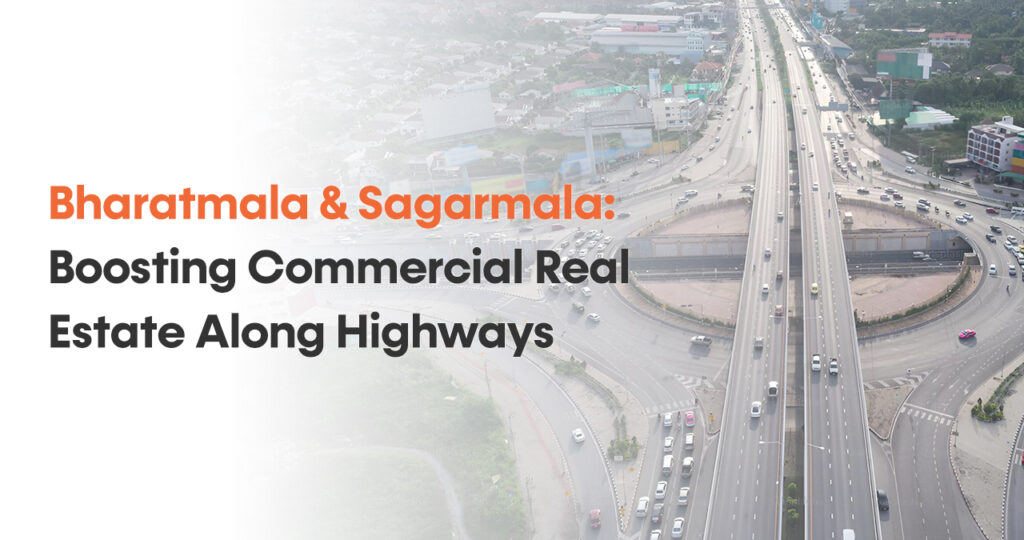
India is witnessing a monumental transformation in its infrastructure landscape with the Bharatmala Pariyojana and Sagarmala Project, two flagship initiatives designed to enhance connectivity, streamline logistics, and propel economic growth. These ambitious projects are not only redefining transportation and trade but also catalyzing a significant boom in the commercial real estate market, particularly along highways. As India strives to cement its position as a global economic leader, the development of highways and port-led infrastructure is unlocking vast opportunities for warehouses, logistics hubs, retail outlets, office spaces, and industrial parks. This article explores how the Bharatmala and Sagarmala projects are driving the growth of commercial real estate along India’s highways, backed by the latest data and tailored to the Indian real estate market.
Understanding the Bharatmala and Sagarmala Projects
Bharatmala Pariyojana: Revolutionizing Road Connectivity
Launched by the Ministry of Road Transport and Highways under Nitin Gadkari’s leadership, the Bharatmala Pariyojana is a colossal highway development program aimed at constructing and upgrading 34,800 km of highways. With an estimated investment of Rs 10.63 lakh crore (US1.3 trillion dollars), it ranks as India’s second-largest highway project after the National Highways Development Project (NHDP). The initiative focuses on creating economic corridors, inter-corridor routes, and feeder roads to optimize freight movement, reduce logistics costs from 18% to 6%, and connect remote regions to economic hubs. Phase 1, targeting completion by 2027-28, prioritizes 9,000 km of economic corridors and 2,000 km of border and international connectivity roads.
Sagarmala Project: Harnessing Maritime Potential
The Sagarmala Project, spearheaded by the Ministry of Ports, Shipping, and Waterways, leverages India’s 7,500 km coastline to modernize ports, enhance port connectivity, and promote port-led development. Encompassing over 610 projects with a timeline extending to 2035 and a total cost of USD 10.5 million, Sagarmala aims to boost trade, create 10 million jobs, and add 2% to India’s GDP. By developing Coastal Economic Zones (CEZs) and improving logistics infrastructure, it complements Bharatmala’s land-based efforts, creating a seamless connectivity network.
Enhancing Connectivity and Logistics
The synergy between Bharatmala and Sagarmala is set to transform India’s logistics ecosystem. Bharatmala’s network of superhighways and expressways will slash travel times, decongest major routes, and improve the efficiency of goods movement. For instance, the Delhi-Mumbai Industrial Corridor will reduce transit time between these economic powerhouses, benefiting industries like manufacturing and e-commerce. Meanwhile, Sagarmala’s focus on port modernization such as upgrades to Vizag and Chennai ports will streamline international trade, cutting turnaround times and logistics costs.
This enhanced connectivity is a game-changer for the Indian economy, making businesses more competitive globally and attracting foreign direct investment (FDI). The reduction in logistics costs alone is projected to save billions annually, fueling demand for infrastructure that supports this economic shift most notably, commercial real estate.
How Bharatmala and Sagarmala Boost Commercial Real Estate
The ripple effects of these projects are profoundly impacting the Indian commercial real estate market, particularly along highways. Improved infrastructure is driving demand for diverse property types, reshaping the real estate landscape.
1. Warehouses and Logistics Hubs
With faster highways and better port access, the need for warehousing and logistics hubs is skyrocketing. A JLL report forecasts that India’s warehousing sector will grow at a CAGR of 12% from 2020 to 2025, propelled by e-commerce giants like Amazon and Flipkart, as well as manufacturing and logistics firms. Bharatmala’s freight-focused corridors, such as the Delhi-Mumbai Industrial Corridor, are prime locations for modern warehouses equipped with automation and IoT technologies. Similarly, Sagarmala’s coastal developments, like the Vizag-Chennai Industrial Corridor, are spurring logistics growth in port-adjacent areas.
Expert Insight: “The warehousing and logistics sector is the biggest beneficiary of these projects,” says Vimal Nadar, Head of Research at Colliers India. “Demand for modern warehousing spaces along highways is set to surge.”
2. Retail Outlets and Commercial Spaces
Enhanced highway connectivity is a boon for the retail sector. As travel becomes quicker and more accessible, retail outlets, shopping malls, and commercial complexes along highways are experiencing increased footfall. This trend is encouraging developers to build new retail hubs and expand existing ones. The growth of industrial parks also necessitates supporting commercial spaces, think banks, eateries, and service centers, further amplifying demand.
For example, the Chennai-Bengaluru Industrial Corridor is poised to see retail growth in cities like Hosur, catering to both industrial workers and travelers.
3. Office Spaces and Business Parks
As businesses expand to leverage improved infrastructure, the demand for office spaces and business parks along highways is rising. Companies are establishing regional offices or headquarters in strategic locations to tap into new markets. The Chennai-Bengaluru Industrial Corridor, with its focus on tech and manufacturing, is attracting firms that require modern office complexes in cities like Krishnagiri and Vellore.
Industry Perspective: Badal Yagnik, CEO of Colliers India, notes, “These projects are creating new growth corridors, driving demand for commercial real estate in previously untapped regions.”
4. Industrial Parks and Manufacturing Units
Both projects are fostering the development of industrial parks and manufacturing units. Bharatmala’s economic corridors provide seamless access to markets, while Sagarmala’s CEZs attract export-oriented industries. The Vizag-Chennai Industrial Corridor, for instance, is emerging as an industrial hotspot, boosting demand for factory spaces and ancillary real estate.
5. Hospitality and Tourism
Improved connectivity is revitalizing the hospitality sector. Hotels, resorts, and rest stops along highways are seeing higher occupancy as business and leisure travel increase. Sagarmala’s coastal focus is also spurring eco-tourism and resort developments, particularly in regions like Andhra Pradesh and Tamil Nadu.
Rising Land Prices Along Highways
The surge in demand for commercial properties is driving land price appreciation along highways. Areas with direct access to Bharatmala corridors or Sagarmala ports are witnessing the steepest increases. For instance, land values near the Delhi-Mumbai Industrial Corridor have risen due to its strategic importance. This trend offers lucrative opportunities for real estate investors and landowners, though success depends on factors like zoning laws, connectivity, and market potential.
Tip for Investors: Conduct thorough due diligence to pinpoint high-growth areas and mitigate risks associated with speculative investments.
Key Regions and Cities to Watch
Several regions are emerging as hotspots for commercial real estate due to these projects:
- Delhi-Mumbai Industrial Corridor: Boosting Jaipur, Kota, and Udaipur with warehouses and office spaces.
- Chennai-Bengaluru Industrial Corridor: Driving growth in Hosur, Krishnagiri, and Vellore.
- Vizag-Chennai Industrial Corridor: Transforming Visakhapatnam, Kakinada, and Nellore into logistics and industrial hubs.
- Tier 2 and Tier 3 Cities: Cities like Surat, Vadodara, and Nellore are attracting investments as connectivity improves.
Technology and Sustainability in Real Estate
These projects also offer a chance to integrate technology and sustainability into commercial real estate:
- Smart Warehouses: Automation, IoT, and solar power enhance efficiency and reduce costs.
- Green Office Spaces: Energy management systems and sustainable designs attract eco-conscious tenants.
Such innovations align with India’s green development goals, making properties more appealing to modern businesses.
Investment Opportunities
The Bharatmala and Sagarmala projects are creating a fertile ground for real estate investment:
- Land Investments: Buy land along key corridors for future appreciation.
- Commercial Developments: Develop warehouses, offices, or retail spaces in high-demand areas.
- REITs: Invest in Real Estate Investment Trusts focusing on commercial properties.
A Mordor Intelligence report predicts that India’s commercial real estate market will grow from USD 49.30 billion in 2025 to USD 128.40 billion by 2030, at a CAGR of 21.10%, fueled by infrastructure projects like these.
Challenges and Risks
Despite their potential, these projects face hurdles:
- Funding: Securing Rs 10.63 lakh crore for Bharatmala and USD 10.5 million for Sagarmala is a challenge, reliant on public-private partnerships.
- Land Acquisition: Delays and disputes over land acquisition slow progress.
- Environmental Concerns: Balancing development with ecological preservation is critical.
- Delays: Bureaucratic and operational issues have pushed Bharatmala’s deadline to 2027-28.
The government is addressing these through streamlined processes and sustainable planning.
Also Read - Gati Shakti Scheme
Conclusion
The Bharatmala and Sagarmala projects are reshaping India’s infrastructure, with profound implications for commercial real estate along highways. By enhancing connectivity, cutting logistics costs, and spurring economic activity, they are driving demand for warehouses, retail spaces, offices, and industrial hubs. As land prices rise and new regions emerge as growth centers, stakeholders have a unique opportunity to capitalize on this transformation. Staying informed and proactive will be key to unlocking the full potential of these landmark initiatives in the Indian real estate market. Check out properties on Lets Rentz if you’re planning to invest in real estate.